

Wet labs

Read about Lions World Vision Institute
To Book a Wet Lab: Complete an online form
- Due to limited space, you will be required to mark 3 potential time slots.
- The time slots will be allocated on a "first come first served"-basis and you will receive a confirmation with your time slot.
- Wet lab participants must be registered for the congress.
Introduction
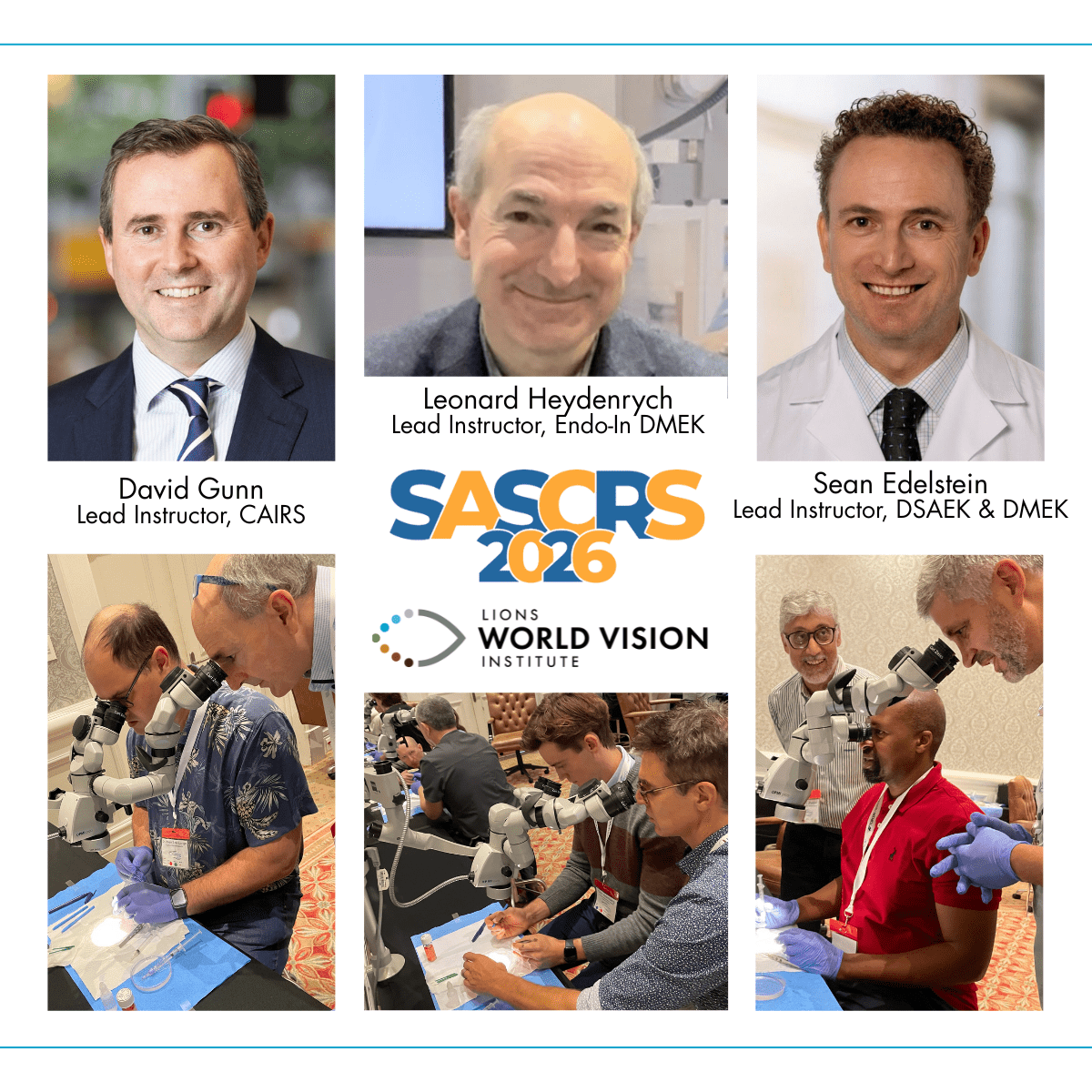
SASCRS 2026 and Lions World Vision Institute (LWVI) are collaborating to provide a series of wet labs at SASCRS 2026.
We will have at least three skills / courses available for advanced keratoplasty techniques. We would like to gauge the delegates’ interest in each one to tailor the course program to the needs.
All courses will use human grafts and human recipient corneas mounted on specialized AAC.
Each course option has a corresponding brochure attached for the device used.
Proposed course options:
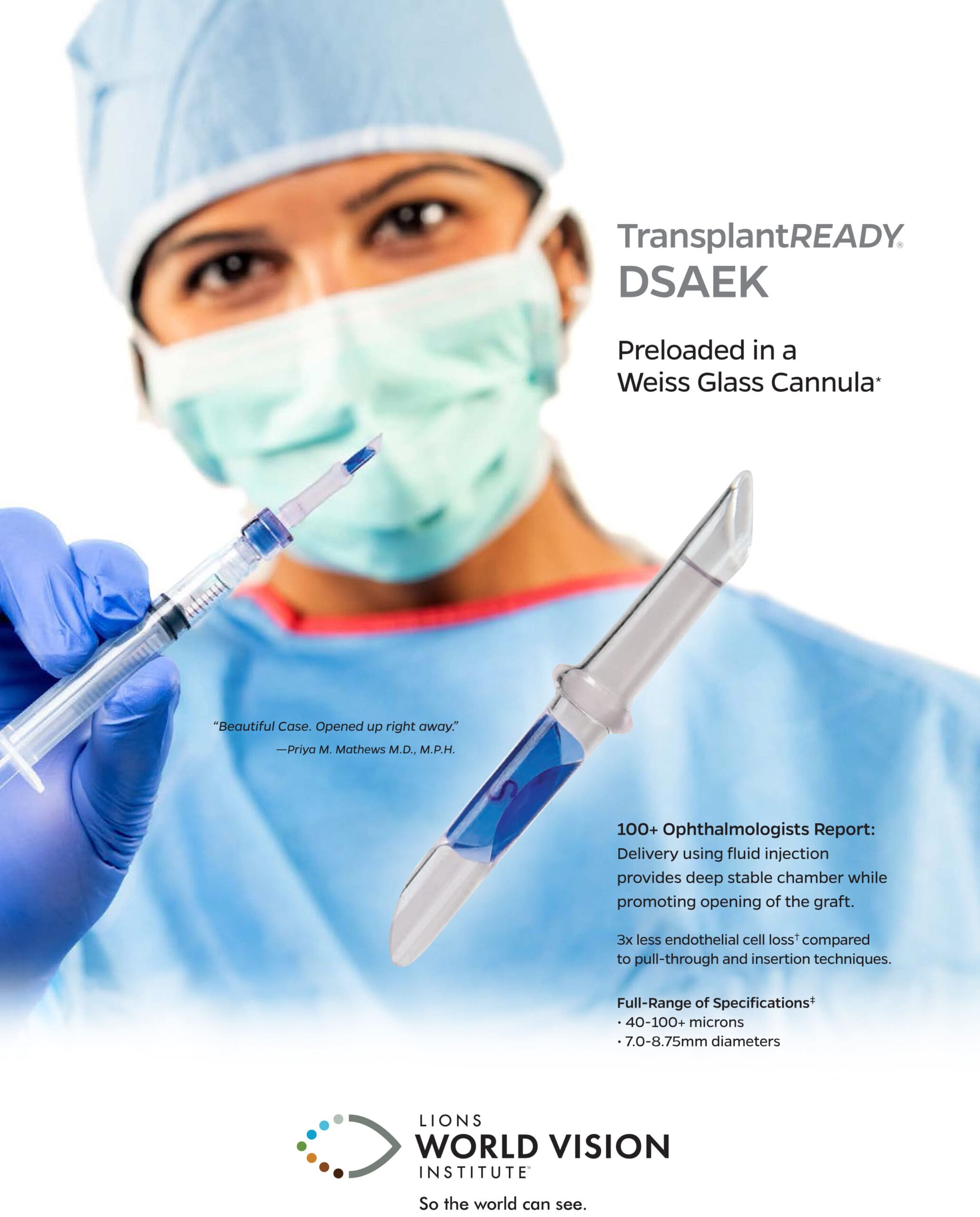
- TransplantREADY DSAEK – advanced DSAEK graft insertion using DSAEK graft preloaded in a glass cannula
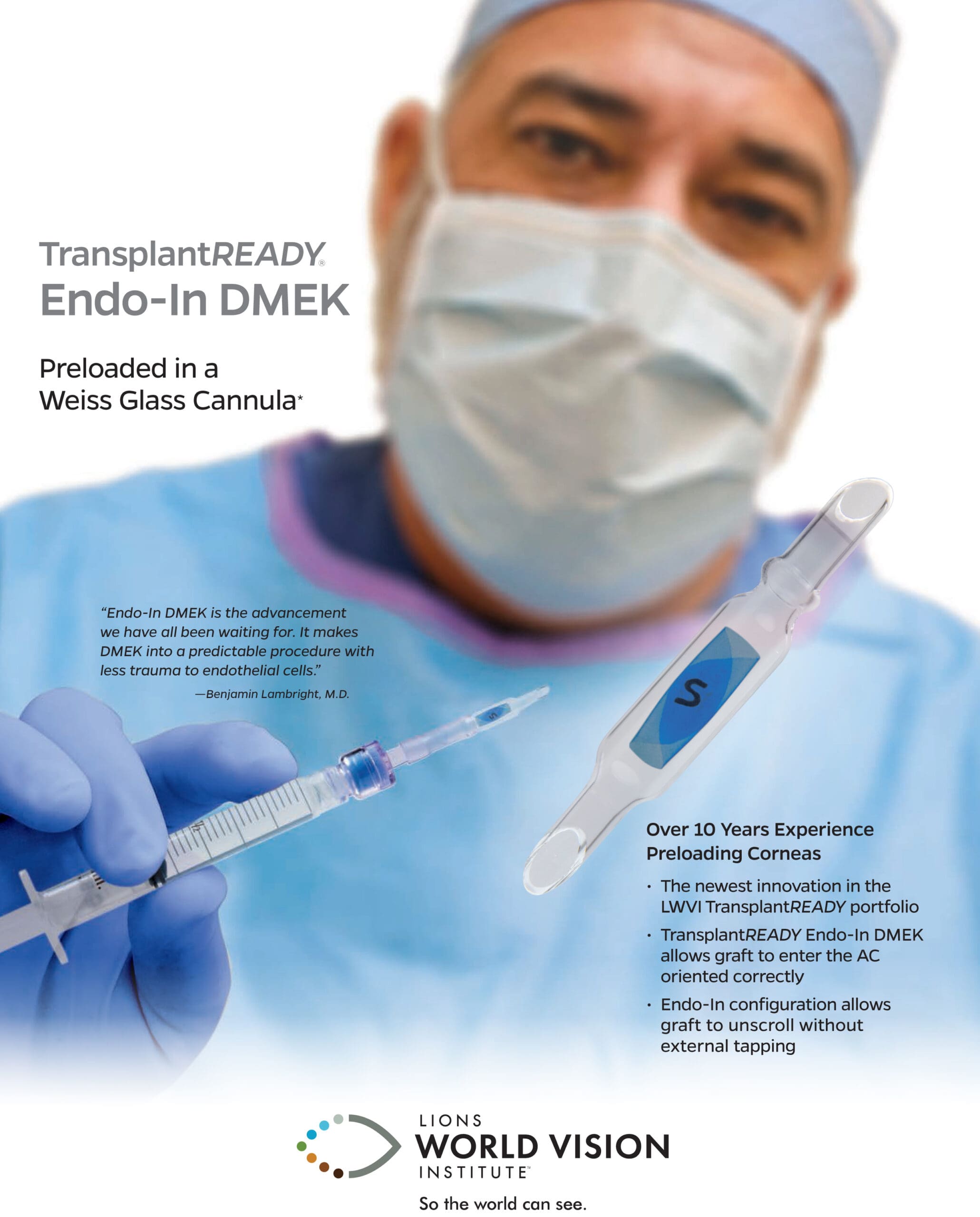
- Endo-In DMEK – advanced DMEK graft insertion using DMEK graft preloaded in glass cannula
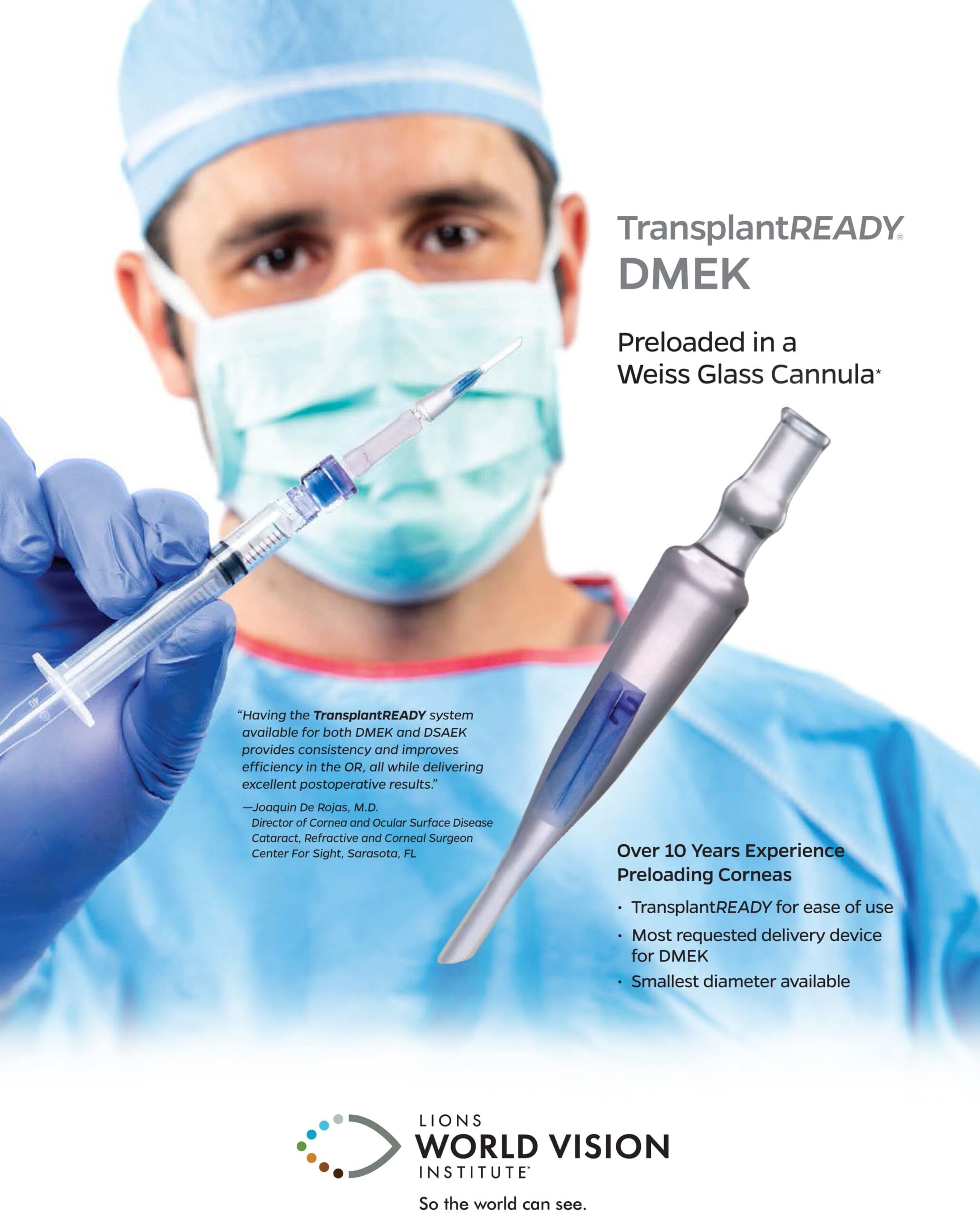
- Traditional DMEK - insertion and unfolding (using tapping technique) of a DMEK graft (naturally scrolled / endo-out) preloaded in modified micro jones tube
- CAIRS Keratoplasty – basic skills transfer – manual creation of intra-corneal tunnels, and insertion of a precut CAIRS graft (presentation(s) will also include femtosecond laser tunnel / channel creation).
Note that these courses do not cover the entire surgical procedure (e.g. no descemetorhexis for EK), and some prerequisites may be required, depending on the course.
Format
- Expert Lead Instructors will present the technique before the practical –
- Dr. Sean Edelstein (USA) for DSAEK and DMEK, along with Dr. Leonard Heydenrych for Endo-In DMEK
- Dr. David Gunn (Australia) for CAIRS Keratoplasty.
- 1:1 practical guidance including local SA expert instructors
Schedule
There will be wet lab sessions every day of the conference.
We will do our best to accommodate everyone’s schedule to fit everyone in
Wet Lab sessions will generally avoid similar-topic symposia / main conference lectures
Schedule will be finalized after responses received and Preliminary Program is published
Cost
R2,500 per Wet Lab (Registered Congress Delegates only)
Read about Lions World Vision Institute
Courses information
All wet labs are supported by a partnership between the SASCRS 2026 conference, Lions World Vision Institute, others supporting microscopes, and Instructors Dr. David Gunn, Dr. Sean Edelstein, Dr. Leonard Heydenrych, and Dr. Cor Van Zyl.
CAIRS
Dr. David Gunn (Australia) will begin the session with an overview of CAIRS, surgical planning, tunnel creation (femtosecond laser and manual dissection), and instrumentation. In the hands-on wet lab portion, the participant will create the CAIRS tunnel in the recipient cornea using a manual dissection technique and then insert the donor CAIRS graft segment into the recipient tunnel. This wet lab uses human cornea CAIRS graft segments and human recipient cornea mounted on an artificial anterior chamber. The lead instructor, Dr. David Gunn, is a worldwide leader with extensive experience in the CAIRS procedure.
Co-Requisite: For Critical Surgical Planning guidance, all participants must attend Dr. David Gunn’s full presentation and lecture, in Session 1 on 13th February at 09:25: CORNEA SA LECTURE, “CAIRS – A paradigm shift in the management of keratoconus.”
Endo-In DMEK
An advanced DMEK insertion technique, the participant will insert a preloaded Endo-In DMEK graft into an artificial anterior chamber, using a fluid wave motion. Because the graft is folded endothelial side in, the graft naturally opens when inserted into the anterior chamber. There is no pulling, no pushing, no cornea tapping required. This technique uses a syringe with BSS to advance the graft; a no-touch technique. The session will begin with a presentation on this device and technique by the lead instructor and supported by other international and South African instructors and LWVI staff. The lead instructors, Dr. Leonard Heydenrych (Cape Town / Port Elizabeth), and Dr. Sean Edelstein (USA), have extensive experience with use and teaching this new device and technique. Because this is an advanced technique, the basics of the Standard DMEK (endo-out scroll) procedure and unscrolling (by tapping) must already be mastered.
Prerequisite: prior Standard DMEK experience required.
Standard DMEK (Endo-Out Scroll)
Using human cornea for graft and recipient model, the participant will insert a preloaded endo-out scrolled DMEK graft into an artificial anterior chamber, using a fluid wave motion, and unscroll the graft using exterior tapping and other movements from cornea surface. The modified micro jones tube has a 1.6mm outer diameter and may not always require a suture. This technique uses a syringe with BSS to advance the graft; a no-touch technique. The session will begin with a presentation on this device and technique by the lead instructor and supported by other international and South African instructors and LWVI staff. The lead instructors, Dr. Leonard Heydenrych (Cape Town / Port Elizabeth), and Dr. Sean Edelstein (USA), have extensive experience with use and teaching this new device and technique. Prerequisite: prior DSAEK or DMEK experience preferred. PKP experience required.
TransplantREADY DSAEK
Using human graft tissue and human recipient mounted on an artificial anterior chamber, the participant will insert the preloaded TransplantREADY DSAEK graft into the AAC. The graft is preloaded into a proprietary LWVI glass cannula and, by using fluid wave motion (BSS in a syringe), the graft moves into the AC and quickly opens without manipulation. It is a no-touch technique. The session will begin with a presentation on this device and technique by the lead instructor and supported by other international and South African instructors and LWVI staff. The lead instructor Dr. Sean Edelstein (USA), has extensive experience with use and teaching this new device and technique. Prerequisite: experience in PKP procedures required, EK experience preferred but not required.
Click on an image for specs
Click on an image for specs
Click on an image for specs
